
Traveling to Europe with parents in their 80's: What worked, what didn't, and what I learned

There are trips you remember because of where you went. And then there are trips you remember because of who was standing next to you when you got there.
I just returned from 10 days in Europe with my husband, two sisters, one brother-in-law, and my parents, who are both over 80. We started with a night in Barcelona, sailed for seven nights through southern France and Italy, and finished with a night in Venice.
Was I a little concerned about how my parents would handle the heat, walking and excursions? Absolutely.
Did they surprise me? Absolutely.
They didn't opt out of a single excursion we'd planned for them.
And maybe that's the first thing this trip taught me: my parents can still surprise me.
I've planned travel professionally for more than 20 years, but this trip reminded me that "manageable" means something different to everyone. An online search or AI tool can tell you what's possible in a day. It can't always tell you what's realistic for your energy level, priorities or the people you're traveling with. That's where knowing the travelers matters as much as knowing the destination.
A few things that worked for us
Choose moderate excursions, but give everyone permission to opt out.
Avoid the Mediterranean in July and August if you have flexibility. The heat was our biggest challenge.
Look beyond an excursion's length. Heat, hills, cobblestones and "hidden" walking can matter more.
Use private transportation when it truly makes the day easier, not automatically.
Don't expect everyone to do everything together.
Build in downtime.

Lesson 1: Do not underestimate the heat
I would not choose August again for Barcelona, southern France and Italy. We had no choice, because my sisters are school teachers and this was our window, but if I were going again to this destination, I'd change the time of year.
The heat and humidity drained our energy quickly, especially when we were walking on cobblestones, climbing hills or standing in crowded attractions.
We planned mostly moderate, shorter excursions and went into every day knowing Mom and Dad could opt out if they wanted to.
They never did.
But giving them that option mattered. There was no pressure to keep up, and we could adjust when necessary.
Lesson 2: The "easy" sightseeing option can sometimes be the best one
We arrived in Barcelona exhausted from our overnight flight, hours before we could check into our hotel.
I'd booked an afternoon tuk-tuk sightseeing tour, and it was one of my smartest decisions. We sat in the shade, got oriented to Barcelona and saw quite a bit without dragging our jet-lagged selves around the city on foot.
The next morning, we toured La Sagrada Família before boarding the ship. This is one place where I'd absolutely pay for a good guide. The architecture is incredible, but understanding the symbolism and details made the experience much richer.
Lesson 3: Pay attention to the walking you don't expect
Our first cruise stop was Toulon, France, where I'd booked an independent food tour rather than traveling farther to Marseille or Saint-Tropez.
We loved the tour. Getting there was another story.
The walk from the ship to the ferry was long and hot, and buying ferry tickets was surprisingly complicated. We figured it out, and it cost considerably less than the cruise line transfer, but it reminded me to pay attention to the logistics before an excursion starts.
A "moderate" excursion doesn't necessarily account for the walk from the ship, waiting in the sun or navigating transportation.

Lesson 4: Sometimes a destination gives you a little perspective
In Corsica, France, our guide proudly told us about Ajaccio's education and healthcare systems and how seriously they take caring for their elderly.
That stuck with me because I was traveling with my own parents in their 80s.
A few hours after leaving Corsica, there was a medical emergency onboard. The captain turned the ship around so the passenger could be taken back for medical care.
Suddenly, our guide's comments didn't feel like sightseeing trivia.
I don't know what happened to that passenger afterward, but watching an enormous cruise ship turn around because one person needed care stayed with me.
When your parents are in their 80s, you're aware that health can change plans quickly. You don't need to dwell on it, but you don't completely forget it either.
It reinforced something I'd been thinking throughout the trip: I'm really glad we went now.

Lesson 5: Everyone doesn't have to do everything together
Rome proved this one.
We began with a private driver who took us to the Rome Italy Temple of The Church of Jesus Christ of Latter-day Saints. Later, we headed into central Rome.
We'd booked a hop-on hop-off bus, but Rome traffic was so bad that we spent far too much of our limited time sitting still. I wouldn't choose that option again with only one day in the city, during such a busy time of year.
Eventually, my parents and one sister returned to the ship while four of us continued to the Colosseum.
It was exactly the right decision.
Nobody felt guilty about stopping, and nobody had to miss something they really wanted to see.
Multi-generational travel works better when everyone doesn't have to do everything together.
And the Colosseum? Incredible. The audio tour wasn't my favorite, but seeing the Colosseum and its arena floor absolutely was.
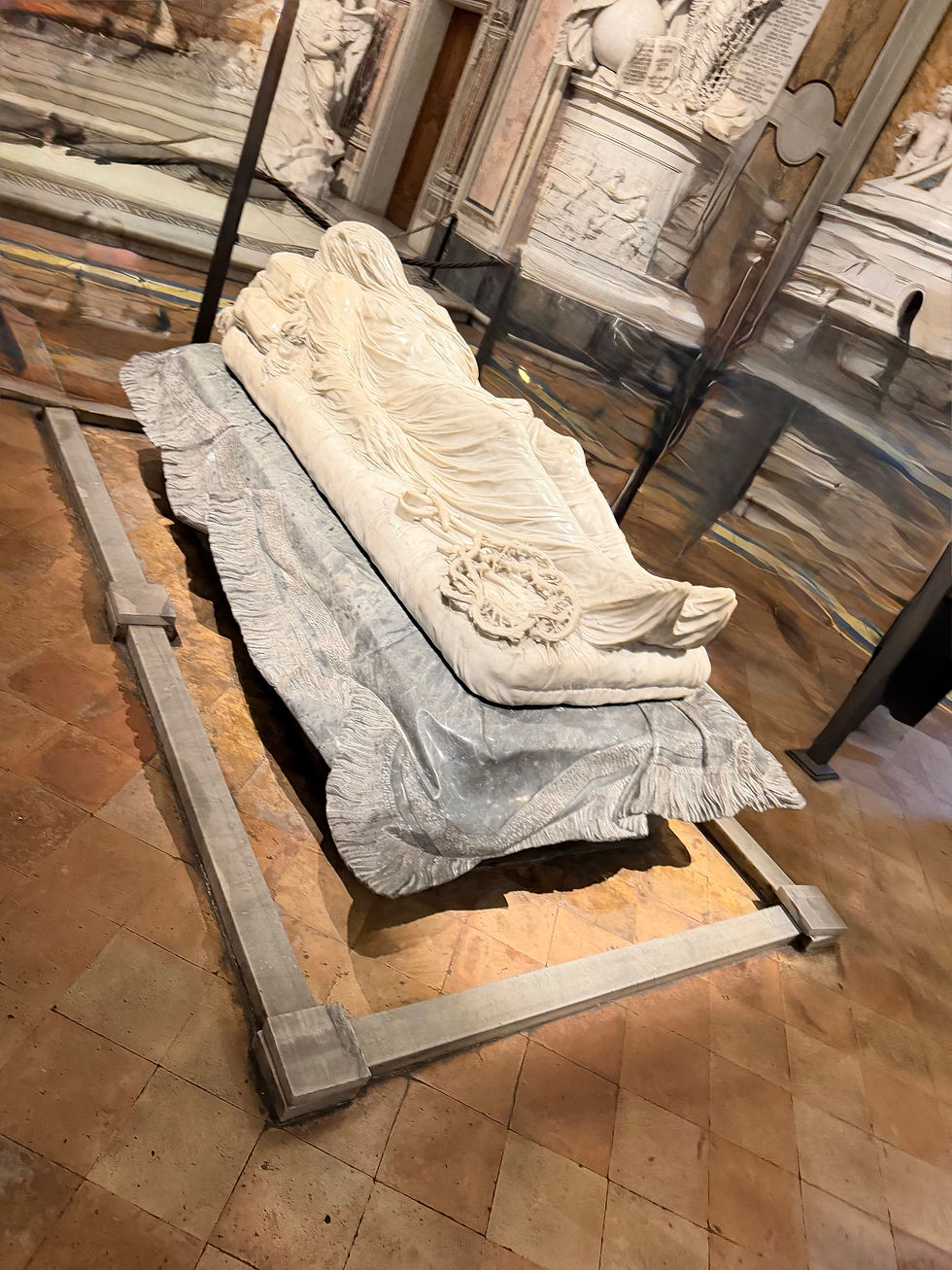
Lesson 6: Don't overlook the smaller experiences
In Naples, we heard about the Veiled Christ from people we'd met the previous day. Some of us went to see it that morning, and it was an unexpected highlight.
I was also glad my parents didn't join us. Getting there involved a long uphill walk in the heat.
Later, we all toured Herculaneum. My parents had previously visited Pompeii and actually preferred Herculaneum. It's more compact, fascinating and easier to experience without covering such an enormous archaeological site.
Another reminder that bigger and more famous doesn't automatically mean better.
Lesson 7: Tour length doesn't tell you how tiring it will be
We were nervous about our seven-hour Sicily excursion after several hot days of sightseeing.
It ended up being one of our favorites.
We visited Mount Etna, where the altitude gave us cooler temperatures and we saw ash in the air from an eruption the previous day. Then we headed to Taormina, where we wished we'd had twice as long to explore, shop and eat.
Seven hours with comfortable transportation and cooler temperatures turned out to be easier than some much shorter excursions involving hills, cobblestones and August sun.
That's something I'll pay even more attention to when planning trips for clients traveling with older family members.
Lesson 8: Convenience is worth paying for in the right places
After a perfectly timed sea day, we disembarked and spent one night in Venice.
Because we were flying home the next morning, I'd booked an airport hotel with breakfast and a free shuttle. It wasn't the romantic choice, but for one night, it made sense. For a longer Venice stay, I'd absolutely stay closer to the center.
We took the train into Venice and used the vaporetto, or water bus. It was crowded and confusing at first, but considerably less expensive than a private water taxi.
We finished our trip with a gondola ride and an excellent audio tour of St. Mark's Square.
Yes, the gondola is touristy.
Sometimes you're in Venice and you should just do the touristy thing.

The biggest lesson wasn't really about Europe
I came home with plenty of practical notes.
I'd choose a cooler time of year. I'd look more closely at terrain and hidden walking. I'd mix private and public transportation based on what made sense that day. And I'd keep building flexibility into multi-generational trips.
But that's not what I'll remember most.
My parents are in their 80s, and we traveled through Europe together.
We stood inside La Sagrada Família. Ate our way through Toulon. Spent a day in Rome. Walked through an ancient city buried by Vesuvius. Stood on an active volcano. Rode through the canals of Venice.
Together.
There isn't an unlimited supply of time when the people you love are healthy enough, willing enough and able enough to go.
Plan thoughtfully. Make it easier where you can. Let people sit something out without guilt. But don't assume age tells you what someone can do.
My parents certainly surprised me.

Frequently asked questions about traveling to Europe with older people
Is a Mediterranean cruise a good way to see Europe with older parents?
For us, yes. We unpacked once while visiting several destinations and had a comfortable place to return to after each sightseeing day. The key is choosing excursions based on actual walking, terrain, temperature and transportation rather than relying solely on an "easy" or "moderate" rating.
What's the best time for a Mediterranean cruise with older travelers?
Based on this trip, I'd avoid July and August if possible. The heat and humidity made sightseeing considerably more tiring. Late spring or early fall can offer more comfortable conditions, although weather is never guaranteed.
Should you book cruise-line excursions or independent tours?
We used both successfully. I'd choose based on the itinerary, transportation, walking requirements and flexibility rather than assuming one is always better.
Is Europe too physically demanding for travelers in their 80s?
Not necessarily. My parents participated in every excursion we'd planned for them. Health, mobility, stamina and heat tolerance matter more than the number on someone's birthday cake.


Comments